Sleep & Weight Connection
What the Scale Misses After a Restless Night
Tobias Whitfield·
·
9 min read

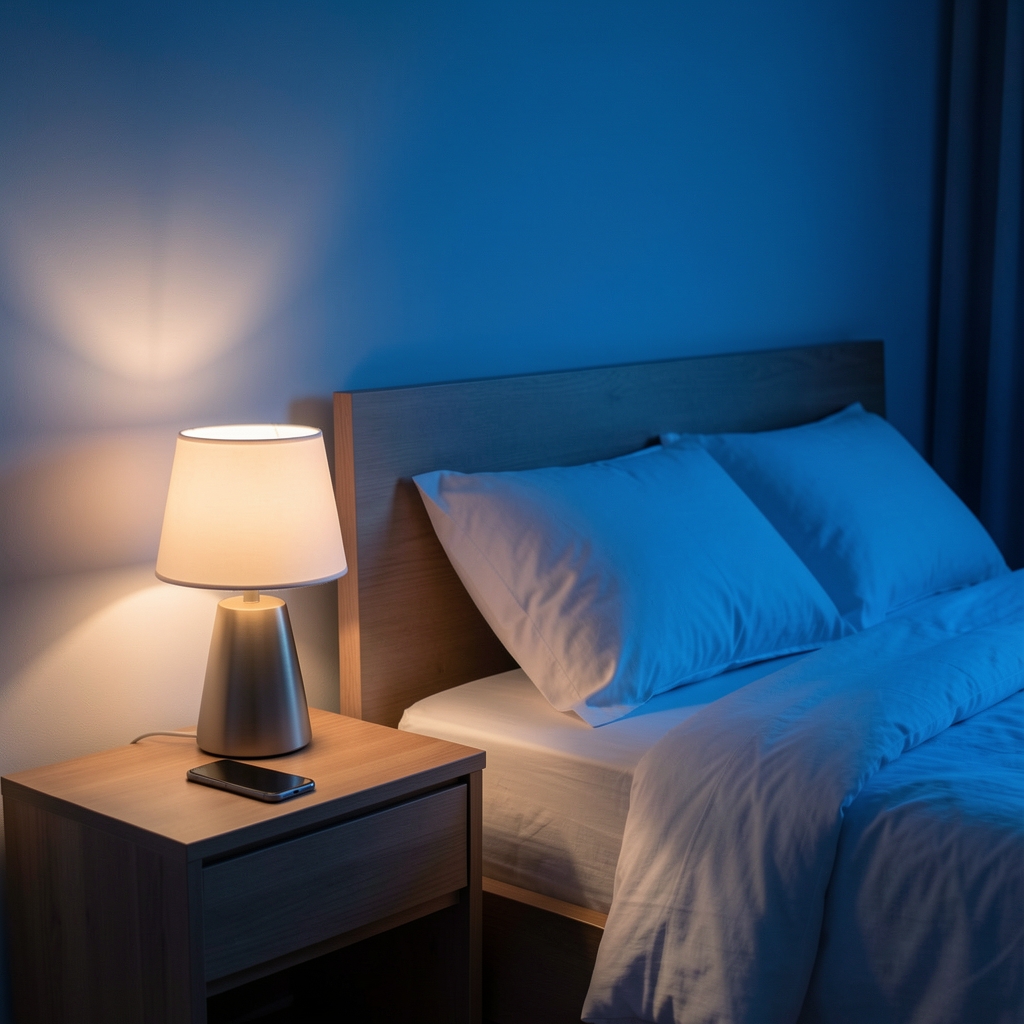
Evening wind-down, domestic setting — London, 2026
The weighted blanket arrived in the consumer wellness market accompanied by considerable promotional noise. By the time the first peer-reviewed studies began appearing, the product had already established itself in the public imagination as either a profound sleep aid or an expensive marketing exercise, depending on the consumer's starting scepticism. Neither framing is entirely accurate, and the distance between them is precisely where useful practical guidance lives.
This piece does not promote the weighted blanket as a category, nor does it dismiss it. It examines what the available evidence actually says, notes where the research base is thin, and considers how the product might fit — or fail to fit — within the specific context of a structured evening wind-down routine for men.
The mechanism proposed to explain the benefits of weighted blankets is described in the research literature as deep pressure stimulation. The concept draws on a broader body of work, primarily from occupational wellness practice, which documents the effects of firm, distributed pressure on the body's arousal and settling responses. The evidence base for deep pressure generally is more established than the evidence base specifically for weighted blankets, and this distinction matters when evaluating the claims made for the product.
Deep pressure stimulation in a general sense is associated, in several well-regarded studies, with reductions in self-reported anxiety and increases in reported calm — effects measured acutely, in controlled conditions. Whether these acute effects translate, in home conditions, to consistent improvements in sleep onset time or sleep depth is a separate question that the research does not yet answer with confidence.
What this means practically: the calming effect of crawling under a weighted blanket at the end of a structured wind-down sequence is plausible and has reasonable supporting evidence for the acute experience. The claim that it produces measurable long-term improvements in sleep architecture — deep sleep stage duration, overnight metabolic efficiency — goes beyond what the current published evidence supports.
The most widely cited recommendation in weighted blanket literature is that the blanket should weigh approximately ten percent of the user's body weight. This figure is not derived from rigorous dose-response research — it emerged from occupational wellness practice and was subsequently adopted by manufacturers as a convenient standard. The research that exists on this specific ratio is limited in sample size and scope.
The practical implication is that the ten-percent rule should be regarded as a reasonable starting point rather than a precise structured guidance. Individual responses to blanket weight vary considerably. A blanket that produces the intended settling effect for one person may feel restrictive rather than calming to another. The research cannot currently predict which direction a given individual will fall.
What does emerge from the available studies is that blankets outside a generally moderate range — either very light relative to body weight, or very heavy — produce consistently less favourable self-reported outcomes. The range of roughly seven to twelve percent of body weight covers the majority of positive reported experiences in the literature reviewed.
"The value of any single wind-down element lies not in its isolation but in its relationship to the sequence surrounding it."
This observation leads to what is, for the purposes of this journal, the more practically important point. The weighted blanket is a physical object with a specific proposed mechanism. Its effectiveness, in the evidence that exists, is consistently better when it is part of a structured sequence than when it is used in isolation. A blanket introduced at the end of a ninety-minute wind-down — one that has already included reduction of overhead lighting, cessation of screen engagement, and a period of quiet non-stimulating activity — is being asked to perform a different role than the same blanket used while watching a bright screen.
The sequence matters more than any individual element within it. This is a finding that runs through the sleep hygiene research generally and applies to weighted blankets specifically. The product's defenders and its sceptics tend to argue past each other because they are implicitly testing different things: the defenders, a blanket used within a considered routine; the sceptics, a blanket introduced into an otherwise unchanged set of evening habits.
For readers establishing or refining an evening wind-down routine, the useful framework is therefore not "does the weighted blanket work?" but "does this element fit coherently into the sequence I am building, and does its presence in that sequence contribute to a consistent settling signal?"
One consistent finding across the available user-experience literature is that overheating is the primary reason people discontinue weighted blanket use. The extra mass of the blanket produces additional retained warmth, which conflicts with the well-established finding that a modest reduction in core body temperature supports sleep onset. A blanket that is warming the sleeper is working against the settling process it is intended to support.
The material composition of the blanket is therefore a practical consideration of some importance. Products filled with glass microbeads rather than plastic pellets retain less heat and distribute weight more evenly. Covers made from natural fibres — linen or cotton — perform better in this regard than synthetic alternatives. These are not trivial distinctions in the context of a warm environment or a naturally warm sleeper.
The ideal use case, on current evidence, involves using the weighted blanket during the pre-sleep settling phase — the period in bed before sleep onset — in a room that has already been cooled to the lower end of the comfortable range. This positions the blanket as a pressure aid during the arousal-reduction phase rather than a retained-warmth addition to a sleep environment that is already too warm.
The weighted blanket is not a cornerstone of the evening routine in the way that consistent wake times or light management are. It is a contributing element — one that may add genuine value for some readers within a well-structured wind-down, and one that will add little for others. The research base is insufficient to predict which category a given reader falls into without trial.
A reasonable trial period is three to four weeks of consistent use within a structured wind-down sequence, tracking morning energy scores as described in the sleep tracking journal approach covered elsewhere in this archive. If morning energy scores improve consistently over this period relative to the preceding baseline, the element is contributing positively. If they do not, the element is not working for that individual and the time and cost are better directed elsewhere.
This is the appropriate evidence standard for any individual wind-down element: not whether it has worked for others in controlled conditions, but whether it produces measurable improvement in your specific tracked outcomes over a defined trial period. The journal is the instrument. The body is the variable. The practice is the experiment.
Dorvan Journal is an independent editorial publication. Articles reflect the writers' observations on everyday wellness practices and are not intended as guidance for the management of any specific condition. Readers with specific concerns about their daily routines are encouraged to speak with a qualified wellness professional.

Eleanor Marsden contributes to Dorvan Journal on the behavioural and environmental dimensions of rest and recovery. Her writing draws on published sleep research and focuses on the practical application of evidence to everyday routine — particularly the role of physical sleep environment variables.
More from this author